
Composite Versus Wood Decking: Which Fits?

A deck should make your backyard easier to enjoy, not give you another long list of weekend chores. When homeowners weigh composite versus wood decking, the right choice usually comes down to more than the initial price. Atlanta heat, humidity, rain, tree cover, foot traffic, and the style of your home all affect which material will serve you best over time.
A well-built deck begins with a clear plan, quality materials, and proper construction beneath the visible surface. The decking boards matter, but so do the framing, drainage, fasteners, railings, stairs, and connection points to your home. Understanding the trade-offs between composite and wood helps you invest with confidence.
Composite Versus Wood Decking at a Glance
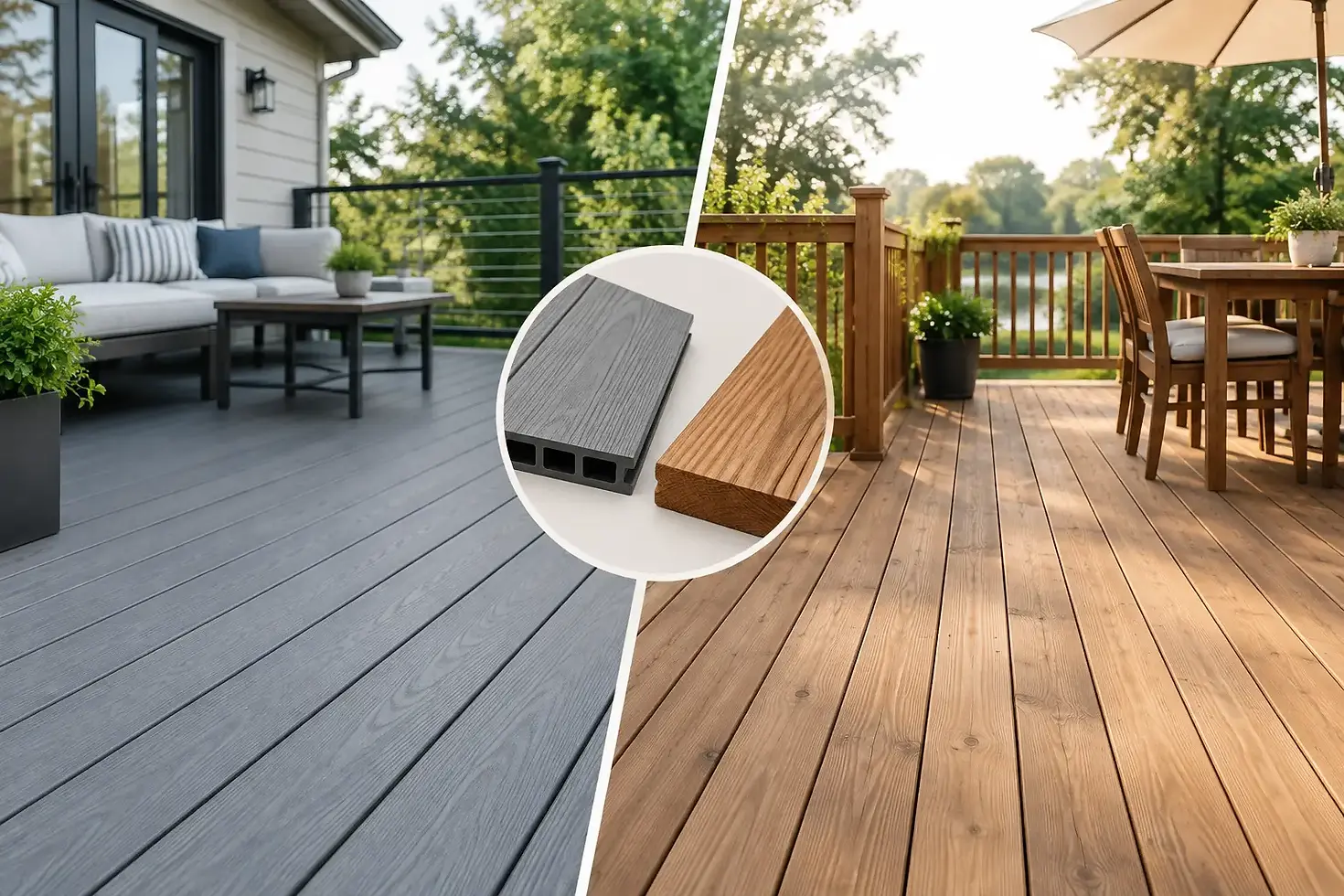
Composite decking is made from a blend of recycled wood fibers and plastic materials. Most premium products have a protective outer cap designed to resist fading, staining, moisture, and surface wear. It is available in consistent colors and grain patterns, from warm brown tones to weathered gray finishes.
Wood decking is a natural product, commonly built with pressure-treated pine, cedar, or hardwoods. It offers authentic grain, variation, and a classic appearance that many homeowners prefer. Wood can be stained in a wide range of colors and refinished over the years, giving it more flexibility if your design preferences change.
Neither material is automatically better for every property. Composite is often the practical choice for homeowners who want lower maintenance and consistent appearance. Wood can be an excellent fit for someone who values natural character, has a defined upfront budget, and does not mind regular care.
Upfront Cost and Long-Term Value
Pressure-treated lumber is generally the most affordable decking material at the start of a project. That lower material cost can make wood appealing when a homeowner needs a functional deck within a tighter budget. Cedar and hardwoods cost more than pressure-treated pine, but can provide a more refined appearance and greater natural resistance to insects and decay.
Composite boards usually cost more upfront, sometimes significantly more depending on the brand, color, board profile, and railing selections. Installation can also require specialized fasteners and careful planning for board expansion and spacing. For a larger deck, those differences can add up quickly.
The long-term equation is different. A wood deck needs ongoing cleaning, staining, sealing, and occasional board replacement. Composite eliminates much of that recurring work. Homeowners who expect to stay in their home for many years may find that composite provides better value, even with its higher initial investment.
The best way to compare costs is to look beyond a single estimate. Consider the size of the deck, the desired railing system, stairs, lighting, skirting, and the condition of the existing structure. A lower-cost deck that requires frequent maintenance may not be the better investment for your lifestyle.
Maintenance in Georgia Weather
Metro Atlanta decks deal with intense sun, summer humidity, frequent rain, pollen, fallen leaves, and shaded areas that stay damp. Those conditions are especially important when choosing a surface material.
Composite decking requires routine cleaning, but it does not need to be stained or sealed. A wash with an appropriate deck cleaner and a soft brush typically keeps it looking presentable. Capped composite is particularly useful around grills, dining spaces, and high-traffic areas because it is more resistant to stains and moisture than traditional wood.
Wood requires more hands-on attention. It should be cleaned regularly, and most wood decks need staining or sealing on a schedule based on the product used, weather exposure, and the amount of shade around the home. Without proper maintenance, boards can fade, crack, splinter, cup, or develop mildew.
That does not mean wood is a poor choice in Georgia. It means the owner needs to plan for its care. A well-maintained wood deck can remain attractive for years, but maintenance should be treated as part of the ownership cost, not an optional task to put off indefinitely.
Appearance and Design Flexibility
Wood has an advantage in natural variation. No two boards are exactly alike, and that character can complement traditional homes, wooded lots, rustic outdoor spaces, and custom architecture. It also accepts stain well, allowing homeowners to refresh the color later without replacing the deck boards.
Composite delivers a cleaner, more uniform look. Modern products have improved greatly from earlier generations, with realistic grain patterns, multi-tonal color options, and concealed fastening systems that create a polished finish. For contemporary homes, covered decks, poolside spaces, and outdoor living areas with coordinated railings and lighting, composite can provide a refined, consistent appearance.
Color deserves careful consideration. Dark composite boards can become hot in direct Georgia sun, particularly around pools or open decks with little shade. Wood can also heat up, but darker synthetic surfaces may retain more heat. If barefoot comfort is a priority, lighter colors and shaded design features should be part of the conversation.
Durability, Safety, and Everyday Use
Composite decking resists rot, insect damage, and splintering better than wood. That makes it a strong option for families with children, pet owners, and homeowners who want a barefoot-friendly surface. Quality capped composite also holds up well against moisture, although it still needs proper installation and drainage to perform as intended.
Wood is durable when the correct species, treatment, installation methods, and maintenance program are used. Pressure-treated lumber is designed to resist decay and insect activity, but it can still crack and splinter as it ages. Cedar and hardwoods offer different performance characteristics, yet all natural wood benefits from proper protection against moisture and UV exposure.
Slip resistance is another practical concern. No deck material is completely slip-proof when wet. Texture, maintenance, algae buildup, drainage, and the slope of the surface all matter. A deck located beneath heavy tree cover may need more frequent cleaning regardless of whether it is built from composite or wood.
Do Not Overlook the Structure Below
The visible deck boards are only one part of the project. A beautiful composite surface installed over weakened framing will not solve structural problems. Before resurfacing an older deck, the framing, posts, beams, ledger attachment, footings, and hardware should be inspected carefully.
Composite boards are often heavier than wood, and some older frames were not built to meet the joist spacing requirements of modern composite products. In many cases, a resurfacing project calls for framing upgrades, new flashing, additional blocking, or a full rebuild. This is where experienced project oversight protects both the appearance and the safety of the finished deck.
For new construction, thoughtful planning can prevent costly changes later. Consider where furniture will sit, how guests will move through the space, whether you want a grilling area, and how the deck connects to a sunroom, addition, or backyard patio. Railing style, stair placement, privacy screening, under-deck drainage, and lighting should be considered before materials are ordered.
When Composite Is Usually the Better Choice
Composite is often the stronger fit when low maintenance is the priority, when the deck receives heavy use, or when the homeowner wants long-lasting color consistency. It is also a smart choice for larger outdoor living spaces where the cost and labor of regular staining would be substantial.
It works especially well for homeowners planning to remain in their home long term. The higher initial investment can be easier to justify when spread across years of reduced maintenance and dependable performance. For a busy family, that can mean more time using the deck and less time working on it.
When Wood Still Makes Sense
Wood remains a strong option for homeowners who want authentic natural texture and the ability to change the deck color over time. It can also be the practical selection when upfront budget is the deciding factor, especially for a straightforward deck with a manageable maintenance plan.
A wood deck is not a lesser deck when it is properly designed and built. Quality pressure-treated framing and decking, correct flashing, solid connections, and a consistent finishing schedule can create an outdoor space that looks right at home on an Atlanta property.
Level 5 Builders helps homeowners make these decisions based on how they actually plan to use their space, not a one-size-fits-all recommendation. The right deck should suit your home, your budget, and the amount of maintenance you are willing to take on.
Before choosing a board color or comparing product samples, start with the bigger question: what do you want your outdoor space to do for your family? A clear answer will lead you to a deck material and design you will be glad to live with season after season.


Comments